Oct 9, 2017 | News
“Alex Brill of the American Enterprise Institute told Tax Analysts that his estimates show that repealing the state and local tax deduction would raise about $1.4 trillion over a decade and could pay for a large reduction in statutory tax rates. “Being the single largest itemized deduction, its repeal can foster significant simplification, as without it more taxpayers will claim the standard deduction,” Brill said.”
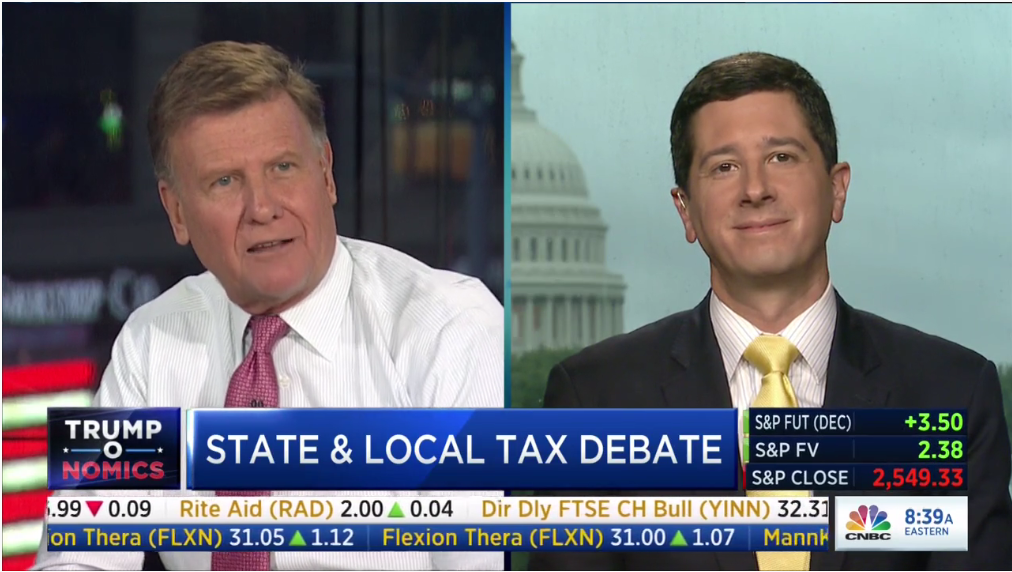
Oct 9, 2017 | Interviews
Discussing the SALT deduction, Alex Brill says:
“That actually is part of the definition of tax reform as it is eliminating and changing the winners and losers arrangement and creating a level playing field…. So, my sense is in those congressional districts, the Republican districts in the blue states where this is going to hurt a little bit more, there are other things in this plan that are going to be good for their constituents overall. We are going to see lower tax rates. We are going to see a larger standard deduction. So we are going to see a lot of people in the middle class better off.”

Oct 6, 2017 | News
“Writing in The Hill, Alex Brill of the conservative American Enterprise Institute estimated that repealing the deduction could help subsidize major parts of the tax plan, including the proposed tax cut for top filers and the expansion of the standard deduction. As Brill wrote, that could mean a cap on how much of a filer’s income could be eligible for the deduction.”

Oct 6, 2017 | Op-Eds
On a bipartisan and bicameral basis, lawmakers have proposed legislation to allow (not require) states to collect sales tax on goods purchased from out-of-state sellers. The legislation is not a new tax but rather facilitates the collection of taxes already due.

Oct 5, 2017 | News
On the other hand, the SALT deduction incentivizes higher state and local spending and doesn’t have the great distributional implications, as my colleague Alex Brill carefully explains here. I could probably go either way on this one.