NEWS
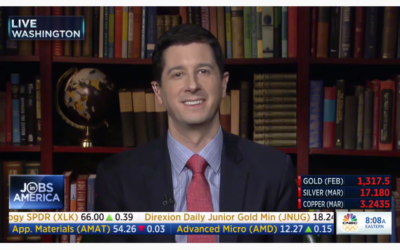
MGA’s Alex Brill on CNBC’s Squawk Box
“Those with a college degree or more have been enjoying a relatively tight labor market for a long time with unemployment rates near 2%. But it’s those with high school or less than high school degrees that had very high unemployment rates that now have the lowest unemployment rates they have ever seen around 5%. So things are pretty good across the spectrum both geographically and by the education dynamic.”
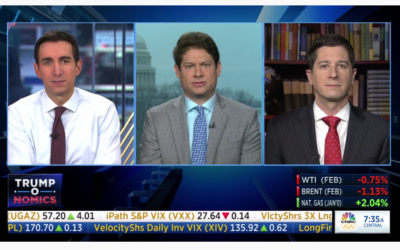
MGA’s Alex Brill on CNBC’s Squawk Box
“Tax returns aren’t due for about 15 months until April 2019 and in that time IRS is going to put out guidance that is necessary. Particularly for this pass through provision which undoubtedly will involve some complications. But generally speaking, I think [with this tax reform] we are not aware of any loopholes or true drafting errors yet. We will see in the next weeks and months if anything opens up.”
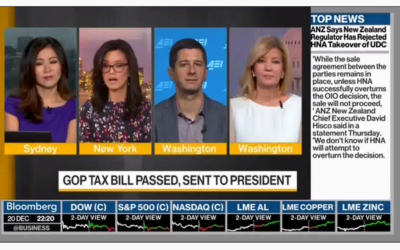
Alex Brill on Bloomberg’s ‘Bloomberg Daybreak: Australia’
“I think it is a historic moment and a fundamental change in the tax system in the United States primarily for one provision in particular – the change in the corporate tax rate from 35% down to 21%. Overall there’s probably close to 100 provisions, there is 500 pages to this bill. So there are lots of changes. I don’t love every single one of them and I am concerned about the deficit impact this bill will have. But I do think it’s going to drive a lot of investment into the United States. It’s going to make a lot of US firms more competitive globally.”
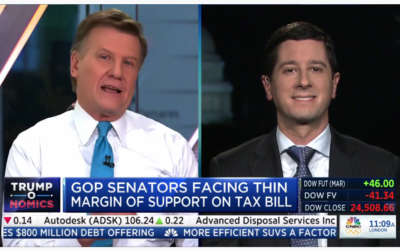
MGA’s Alex Brill on CNBC’s Squawk Box
“There are all sorts of changes, international, regular C Corp, these pass through provisions for smaller businesses, and of course on the individual side. Everyone is going to be affected. The truth is, I think a lot of the middle class are going to be affected by a relatively small degree. The code is changing in many ways. Most of them will be better off, can’t guarantee that everyone will be better off…. I think the complexity of the tax code is shifting from the middle class, they’ll have a simpler system, but it’s shifting up to higher income individuals. And for many high income individuals, this pass-through provision is going to be more complex for them.”

Tax Code in Transition: How to Treat Accumulated Untaxed Foreign Earnings
Lawmakers are on the verge of fundamentally updating the international provisions of the US tax code. Currently, we have a worldwide system, under which profits US firms earn abroad are subject to US tax minus a credit for foreign taxes paid and subject to a deferral until repatriation. In an effort that began in 2011 with draft legislation from former Ways and Means Chairman Dave Camp, Republicans have been determined to transform the US tax code into a territorial system, under which active income earned abroad is generally exempt from US tax.
MGA’s Alex Brill on WAMU-FM’s “1A”
“The bills both in the House and the Senate not only reduce the corporate C corporation tax rate from 35 to 25%, the issue we have been discussing, but both bills create a lower tax rate for pass through businesses: sole proprietorships, S corps, LLCs. Not all LLC’s will get that pass through. Not all pass throughs will get that break. But there is a large explicit tax break for small businesses. With respect to the question about deductions, those deductions will remain. Business deductions will remain deductible. Other deductions for individuals, some of them are being curtailed, but not on the business side.”

Fiscal Reform Lessons from the Anglosphere
Congress is deeply entrenched in an effort to reform the federal tax code. Central to this effort is a desire to lower the U.S. corporate tax rate from 35 percent to 20 percent — a level on par with the rest of the developed world. Policymakers are keenly aware of the competitive advantages this change could bring based on similar rate changes across Europe and around the globe.

The Bleak Long-Run Outlook: US Fiscal Policy and How to Improve It
The United States is slowly but surely headed toward a federal debt crisis certain to inflict serious economic hardship on future generations. Today, the amount of federal debt held by the public stands at $14.8 trillion (all figures in this paper are in US dollars). While the US economy is expected to grow 76 percent in the next 30 years, that debt burden will, in inflation-adjusted terms, increase by over 240 percent during that time. Returning to a sustainable fiscal outlook will require hard choices and a clear understanding of both what led us to this point and the economic consequences of inaction.

Republicans Forge Ahead With Tax Reform
“The House bill and the Senate bill are not identical but are very much on the same page, according to Alex Brill, a resident fellow at AEI, a conservative think tank. Most changes will be technical in nature and carried out by the conference committee. According to Brill, reconciliation might take longer than lawmakers have predicted, but he is confident that the differences will ultimately get resolved.”

The Case for Fiscal Reform: Lessons from the Anglosphere
Federal fiscal reform in the United States is increasingly necessary but over the last two decades has remained elusive. Part of the reason for the inaction reflects different political preferences and priorities. Part of it reflects differing views about the possible economic and social effects of controlling public spending and fiscal deficits. The result is that the US federal debt continues to grow unabated, which poses an increasing threat to future generations of citizens.

Corporate Rate Cut: A Gradual Phase-in Would Be Best
Both the House’s tax bill and the Senate Finance Committee’s bill slash the corporate income tax rate from 35 to 20%, a much needed reform that will pull capital into the United States and grow the economy. Thankfully, both bills cut the corporate rate on a permanent basis.
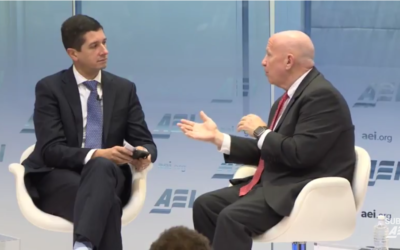
Opportunities for Tax Reform: Remarks From House Committee on Ways and Means Chairman Kevin Brady (R-TX)
Following his remarks, Chairman Brady joined AEI’s Alex Brill for a discussion on the potential opportunities and impacts of tax reform. Mr. Brill asked Chairman Brady about the features of the Tax Cuts and Jobs Act and the ways in which the act would affect different individuals. Mr. Brill discussed the significance of the corporate tax rate cut and the change in standard deduction that tax reform would bring. Chairman Brady concluded by emphasizing the importance of moving to a simpler tax system.

How Much Economic Growth Can Tax Reform Deliver? Part III
I believe that the current US tax code imposes drag on US economic growth and alternatives to the current system could result in an increase in the capital stock, a boost in worker productivity, and thus an increase in wages. This positive economic result would occur slowly over time as new investment is deployed and workers adopt to new opportunities.

Relax, the Housing Market will be Fine After Tax Reform
The prospect of major tax reform that broadens the tax base and lowers tax rates has the residential housing industry in panic mode. The National Association of Realtors recently called the House tax bill “an outright assault on homeownership in America.” Separately, a study commissioned by the Realtors warns that comprehensive tax reform would result in an average drop in home values of 10%. But the reality is that the housing market will be fine if the House Republican tax plan is enacted.

A Letter to the FDA Regarding iQOS, a Less Harmful Alternative to Cigarettes
We are scholars at the American Enterprise Institute, a nonpartisan, nonprofit policy research entity. Dr. Satel is a practicing psychiatrist who has studied and researched a broad range of matters related to mental health policy and addiction, including tobacco harm reduction. Mr. Brill is an expert in public finance and health economics, with a concentration in the economic and public health implications of smoking and its alternatives. The views expressed here are ours alone and may or may not reflect the views of our colleagues.
- Senator Booker’s Costly Standard Deduction Proposal Would Reduce Charitable Giving

- FDA Continues to Expedite Biosimilar Development

- Diminishing Returns from the Government’s Drug Negotiation Program

- Would Senate Passage of an ACA Tax Credit Extension Matter?
- MGA Brief Examines State and Federal PBM Mandates
- FDA Moves to Facilitate Biosimilar Development

- How Pharmaceutical Tariffs Will Affect US Health Care Costs
- MGA Releases New Report Quantifying the Economic Impact of Healthcare Distributors

- The Unsung Hero of the OBBBA: Permanent Expensing
- Alex Brill Interviewed by Biosimilars Review & Report