
NEWS

MGA’s Alex Brill Serves as a Panelist for Cato Institute’s Capitol Hill Briefing on “Home Stretch for Major Tax Reform?”
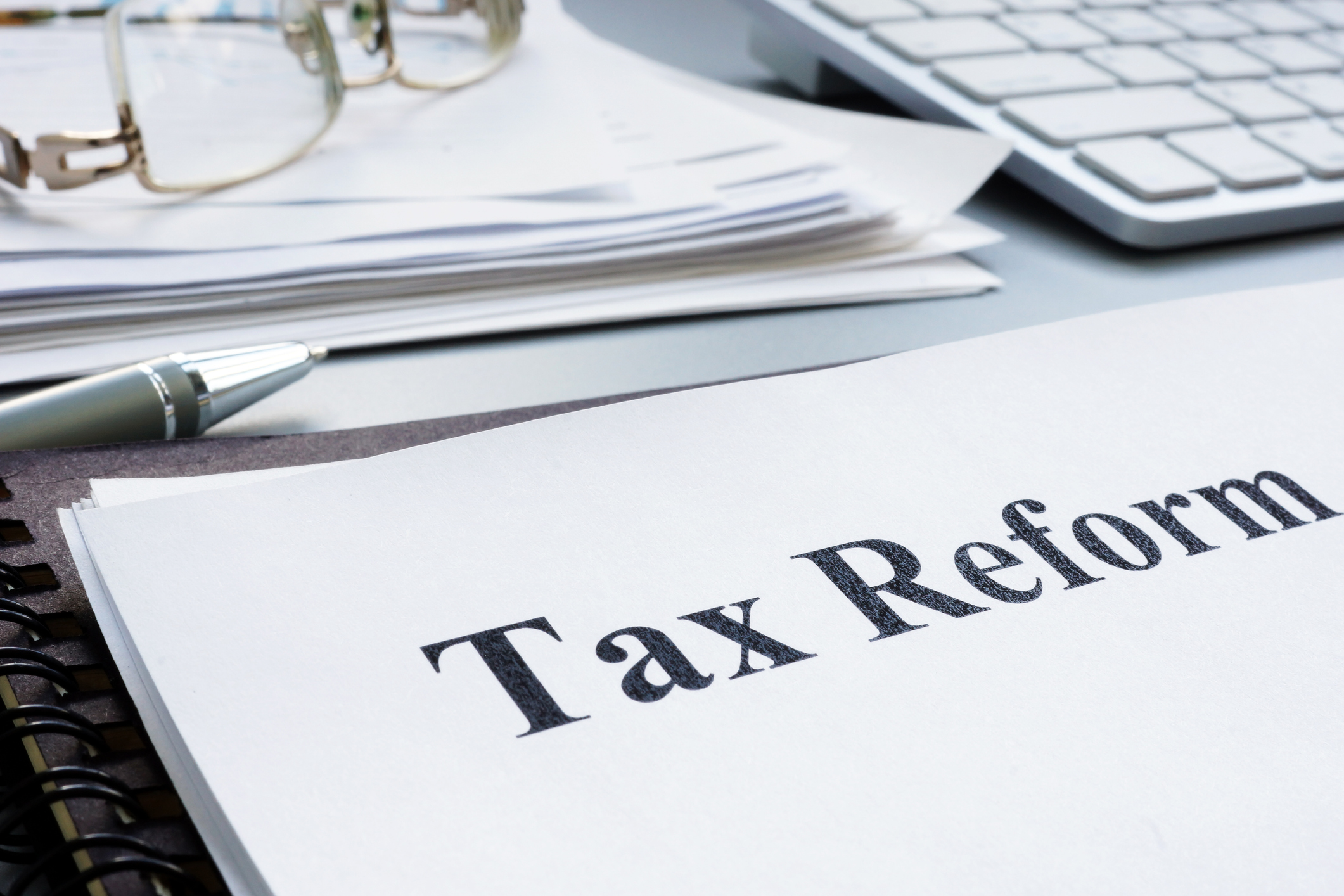
While speaking as a panelist, Alex Brill says, “we can have a tax reform that is net positive for the overall economy. With a better system, one different from the system we have today, the size of the US economy will be larger than it otherwise would be. It will take time from the day of enactment to the day that that effect is fully realized. And during that period of time, the economy will grow faster and then it will reach this new higher level that it otherwise wouldn’t reach and we will all be better off as a result of that.”

What the Conservative Economist Alex Brill Told Penn Students About Tax Reform this Week
“[Alex] Brill explained that it might be the right moment for tax reform. He expected a bipartisan bill to emerge early next year to serve as the latest in a cycle of tax policies that should help stimulate the US economy, but added that he isn’t holding his breath. “It’s been 31 years since lawmakers did something called tax reform,” Brill said.”

MGA’s Study for Generic Pharmaceutical Association is Referenced on USA Today
“As the result of this infuriating tactic, patients, insurance companies and the federal government pay an additional $5.4 billion annually on drugs, according to a study by Matrix Global Advisors for the Generic Pharmaceutical Association.”

Most Prevalent Deduction is for Taxes Paid, IRS Data Show
“Alex Brill of the American Enterprise Institute told Tax Analysts that his estimates show that repealing the state and local tax deduction would raise about $1.4 trillion over a decade and could pay for a large reduction in statutory tax rates. “Being the single largest itemized deduction, its repeal can foster significant simplification, as without it more taxpayers will claim the standard deduction,” Brill said.”
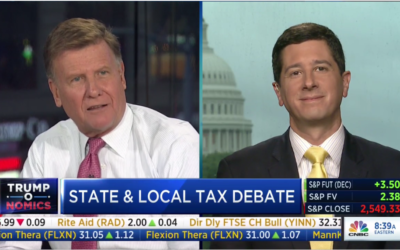
MGA’s Alex Brill on CNBC’s Squawk Box
Discussing the SALT deduction, Alex Brill says:
“That actually is part of the definition of tax reform as it is eliminating and changing the winners and losers arrangement and creating a level playing field…. So, my sense is in those congressional districts, the Republican districts in the blue states where this is going to hurt a little bit more, there are other things in this plan that are going to be good for their constituents overall. We are going to see lower tax rates. We are going to see a larger standard deduction. So we are going to see a lot of people in the middle class better off.”

Congress Wants to Eliminate the State and Local Tax Deduction. What’s That?
“Writing in The Hill, Alex Brill of the conservative American Enterprise Institute estimated that repealing the deduction could help subsidize major parts of the tax plan, including the proposed tax cut for top filers and the expansion of the standard deduction. As Brill wrote, that could mean a cap on how much of a filer’s income could be eligible for the deduction.”

Beware These Misleading Arguments Against an Internet Sales Tax
On a bipartisan and bicameral basis, lawmakers have proposed legislation to allow (not require) states to collect sales tax on goods purchased from out-of-state sellers. The legislation is not a new tax but rather facilitates the collection of taxes already due.

Why it Makes Sense that State and Local Taxes are Deductible
On the other hand, the SALT deduction incentivizes higher state and local spending and doesn’t have the great distributional implications, as my colleague Alex Brill carefully explains here. I could probably go either way on this one.
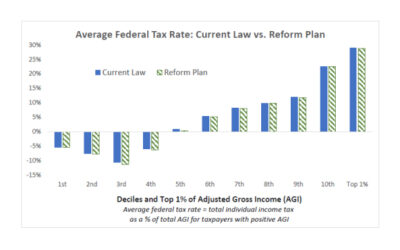
SALT Repeal: Illustrated
The SALT deduction is the largest itemized deduction and one of the largest tax expenditures in the entire tax code. I estimate that its repeal would raise $1.4 trillion in new revenue over a decade. In the piece for The Hill, I calculated how to “recycle” that $1.4 trillion in a distributionally neutral manner by lowering tax rates and increasing the standard deduction.

Best Part of Republican Tax Plan is Repeal of the State Tax Deduction
The latest Republican tax reform framework promises to lower statutory rates and repeal scores of tax preferences. The centerpiece of the reform of the individual income tax is the repeal of the largest itemized deduction, which is for for state and local taxes. Repealing this deduction alone can finance a cut in the top tax rate to 35 percent and a reduction in other rates, preserve the tax code’s progressivity, substantially increase the number of taxpayers on the standard deduction, and cut taxes for half of all filers.

First GOP Tax Reform Feud Erupts Over State, Local Tax Break
“The tax benefit provided $338 billion in deductions in 2015, making it the most widely claimed itemized deduction that year, according to the most recently available IRS statistics. Fully repealing it would raise $1.4 trillion in revenue over a decade, according to an estimate by Alex Brill of the conservative-leaning American Enterprise Institute.”

Who is Helping After Hurricane Harvey?
Hurricane Harvey hit Southeast Texas last month with tremendous winds and poured an overwhelming amount of rain over thousands of square miles of land. More than 185,000 homes have been damaged or destroyed in Texas, and property damage estimates start at $50 billion. More than 80 people lost their lives, and thousands of families will forever be affected by the storm’s devastation.
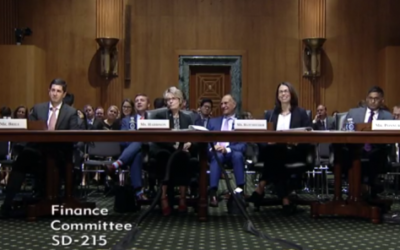
AEI Scholars Bookend the Witness Table at Senate Finance Committee
Last week, I had the privilege of being one of four witnesses invited to testify at the Senate Finance Committee’s wide-ranging hearing on reforms to the individual income tax. Sitting down the witness table from me was AEI visiting fellow Ramesh Ponnuru. Our testimonies approached tax reform from different vantage points. Ponnuru homed in on one tax policy — what he calls the “parent tax” — and made a clear case for the expansion of the child tax credit as a remedy. I gave a broader view of tax reform principles and the importance of broadening the tax base (that is, limiting deductions, exclusions, and credits).

MGA’s Alex Brill on CNBC’s Squawk Box
“One of the things we heard yesterday is that there is pretty wide agreement among all lawmaker about the problem. There may not be agreement about the solution. That’s an underappreciated fact.”

Testimony: The Opportunities for Individual Tax Reform
The opportunity for fundamental and comprehensive tax reform is before this Committee for the first time in many decades. As every Member of this Committee well knows, the tax code has frequently and sometimes significantly changed over the last 30 years, but not since 1986 has it been truly reformed in a manner that sought to broaden the base – that is, eliminate special deductions, credits, and exclusions– while lowering statutory tax rates. As Senators Hatch, Wyden, Roberts, and Grassley know firsthand, that legislative process was arduous and sometimes controversial, but the 1986 Tax Reform Act did result in a simpler income tax code with a broader tax base and significantly lower statutory tax rates.
- Senator Booker’s Costly Standard Deduction Proposal Would Reduce Charitable Giving

- FDA Continues to Expedite Biosimilar Development

- Diminishing Returns from the Government’s Drug Negotiation Program

- Would Senate Passage of an ACA Tax Credit Extension Matter?

- MGA Brief Examines State and Federal PBM Mandates
- FDA Moves to Facilitate Biosimilar Development

- How Pharmaceutical Tariffs Will Affect US Health Care Costs

- MGA Releases New Report Quantifying the Economic Impact of Healthcare Distributors

- The Unsung Hero of the OBBBA: Permanent Expensing
- Alex Brill Interviewed by Biosimilars Review & Report